

“Design thinking” is a skill most often attributed to designers and their talent. However, what “Design thinking” really is, first of all, is a carefully thought-out strategy that is based on the understanding of the user and the experience with which we come up with creative ideas, i.e. solutions that attract attention.
How to think like a designer?
Therefore, within this topic, we will try to guide you on how to think like a designer and how it can affect your brand or business.
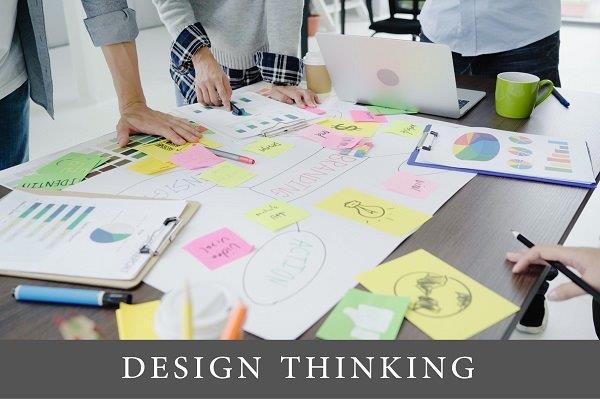
Design thinking begins with the need to create a brand image and values that you will clearly communicate to your target audience. That is why it is perhaps most important to put yourself in the shoes of the user and offer visual solutions that are close and comfortable to them instead of promoting your design skills.
Design is just a guide to keeping the end user at the center of the process, where it belongs.
Be innovative
Innovation is one of the most important goals of design. Fresh ideas and a way of communication are not a matter of aesthetics but of identity and content. As tastes are different, you should avoid design based on subjective factors such as, for example, beauty, but focus on original and innovative solutions with a clear message that will attract attention and be remembered by users.
Offer solutions
One of the steps in the design process is to understand the shortcomings of the market or brand, as well as the problems that these shortcomings cause for the user. Apart from critical analysis, it would be ideal for you to come up with practical, graphic solutions through “design thinking”.
Design process
“Design thinking” should clearly define the steps and actions that designers should follow during the project. At the same time, as it is about a way of thinking, it is important that they are not understood as rules and instructions for use, but as guidelines that you may or may not follow during the process.
Empathy
Design should start with the ability to observe and understand users. That is why it is important to have as precise and clear a picture of the target group as possible.
Designers must understand the emotions of the users and try to identify with the target group in order to clearly see their needs.
Definition
During the research, we should ask as many questions as possible “why?” and thus we arrive at a clear definition of what the users want. It also helps us get a tangible goal to strive for.
An idea
Start with a piece of paper and try to sketch as many solutions as you can. The first associations may be useful, but it is unlikely that their realization will be what you are looking for. So, develop as many ideas as you can, even the ones you don’t think are good enough.
Most of them have their own technique for creating ideas and some of the most famous ones are brainstorming, mind mapping, sketching and others. If you have the opportunity, it is good to listen to some of the ideas of users or collaborators.
When you have a solid pile of ideas, it’s time to think and sort through them and run the selected ones on the computer. Be sure to keep your ideas handy, as you may need to try alternatives in the next step.

Prototype
A prototype is a quickly built, test version of the final solution. You can think of a prototype as the materialization of an idea.
Prototypes are only important in series production projects to avoid unnecessary costs. Many ideas that look great on paper are not so in the final version.
For certain projects, a mockup will be sufficient instead of a prototype. Simply, it is important to create a sufficiently clear idea of how the product will look and function in the shortest possible time.
So, for “Design thinking” we could say that it is a process of creative innovation with a focus on customer needs.
For more news and interesting stories from digital marketing, visit our blog page or follow our Instagram profile.
Made by Sava Spasić – Senior Graphic Designer @Digitizer
Pročitaj:


