

If you are a beginner, or simply want to better understand graphic design , the multitude of materials, tutorials and graphic solutions on the Internet can be confusing at first glance. We offer you some useful tips and unwritten rules on where to start and how you can improve your brand’s visual communication with consumers.

Graphic design is all around us and should not be taken lightly, but from the very beginning you should build your brand so that, in addition to the necessary information and interesting content, it offers clear and visually acceptable publications to your consumers.
How to best understand graphic design
For graphic design, there is no simple formula to achieve a good graphic solution, because there are a number of parameters that influence it, but there are a number of rules that can be used to achieve successful results even if you are a beginner.
Research
You should definitely not skip this step, no matter how short the deadlines. Some designers use the term “moodboard”, but it’s really about searching the internet and creating a story around your project.
By collecting different information, you will create references that will later be used to create the atmosphere around your design, and therefore the brand in general.
We’ve already talked about platforms like Pinterest that, along with Google, can significantly help you in this step.
After some important information you should already have a plan. Depending on the complexity of the project, try to plan step by step. If you take a few moments to sketch in the beginning, it can save you a lot of time during the process itself.
Stylization
When you come up with some solutions, consider whether you could simplify them further. Minimalism is a trend that is currently bringing results. It’s important not to sacrifice readability for visual appeal.
If you are in doubt, start with typography . Although there is a huge selection of fonts on the Internet, limit yourself to a maximum of two within your brand.

Colors
We already wrote about the theory and psychology of colors in one of the previous topics. When choosing a color palette for your brand, limit yourself to 1-3 colors.
Also deal with the proportions of the use of colors. There are several rules regarding the application of colors from the palette, but one of the most successful is the 60:30:10 rule, that is, apply 60% one, 30% second and 10% third color within your design.
Spacing
The space between graphic elements within your design is called whiteness or ” negative color “. Whiteness leaves consumers with the impression of a clean and modern design. That space is not simply the absence of content, but a matter of choice and can be used to achieve contrast and visual hierarchy. Create larger white spaces around the elements you want your consumers to focus on.

Hierarchy
In addition to making it easier for your customers to read, visual hierarchy allows them to focus on important information within your design. Regardless of style and aesthetics, your design will only be successful if it conveys the message you wanted.
For visual hierarchy, apart from size and color, one of the most important elements is alignment. By aligning the elements, you will achieve that your design looks compact and neat.
For your visual hierarchy, it’s also a good idea to use horizontal and vertical lines that will guide the consumer’s eyes to easily flow through the content of your design.
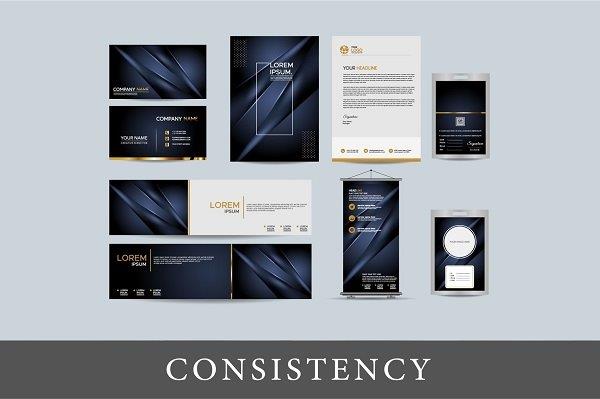
Consistency
Once you set all these guidelines in your design it is important to stick to them.
Make sure the images you use within your brand and design have the same vibe. Preferably, they have the same color tones or saturation level, as well as similarities in how much detail they have.
Be consistent with your colors and repeat graphic elements whenever and wherever you can, taking care not to overdo it.
However, consistency is especially important when your design spans multiple pages or in the case of a visual identity for an entire brand. Brand design should be recognizable everywhere your target group could see it, be it on the website, business cards, social networks, products or environment.
Applying these few rules will create certain results, but only by improving them by introducing innovations and experimentation can you “move the scale” and build the necessary experience.
For more news and interesting stories from digital marketing, visit our blog page or follow our Instagram profile.
Made by Sava Spasić – Senior Graphic Designer @Digitizer
Pročitaj:


